Or, how Volkswagen software feels like a fresh breath of air from the 80s.
I recently bought a used 2016 Passat GTE plug-in hybrid. The car is extremely pleasant to drive and I absolutely love driving using the electric mode. Looks like we get around 45km on electricity, which has actually covered most of our drives so far, making the trips cheap and ecological. On the longer 100km drive to the countryside home, the fuel consumption was 3.2l/100 km, which is a massive improvement over the previous car. I got the car with a half full tank and I haven’t filled it yet, and it looks like I won’t be visiting the gas station any time soon. This part of the experience is making me have little doubts my next car will be a full electric one – I’m just waiting for the family size ones to become a bit more affordable. On to the point of this writeup…
The modern Volkswagens come with a bunch of online services and the on board entertainment system is full of features accessed using a touchscreen, including a navigation system. I wanted to see what these are like and update the software, and that’s when the user experience went downhill.
Looking at the software in the car and how it behaves, it’s very quickly obvious that the GTE is still made in the era of component contract suppliers. What Volkswagen has done is looking at what components and systems are available on the market that can be added to a bullet list of features in the car and then used very fancy superglue to attach these things together, resulting in a whole where the individual components don’t work in concert in a manner that creates a cohesive user experience. What’s probably making this worse is, Volkswagen, as many other car manufacturers, has decided to add incremental monetisation on their cars in form of multiple subscription service layers required to use the features in the car. Or… some features of the car, where systems that’d benefit the most from being controllable by an app, such as the winter heating system, are not supporting remote controls at all. And some services such as getting a hardware health report that tells you whether you should go to a repair shop that absolutely should be free, are behind a subscription.
Car Net and We Connect
The online services of VW are split to two parts: Car Net and We Connect. As a comsumer, I have absolutely no idea why they use the double branding. Apparently Car Net is the low level connection layer underneath used by the consumer facing We Connect system. You need to create an account to the We Connect portal and then activate Car Net on your car to link your account and the car. To actually use the system, you then need to subscribe to additional service packages. I picked the basic package and thought I was done, but for some reason the car did not get online despite me activating the car multiple times and the car telling me the service activation was successful.
Calling the support number, I found the eSim in the car was disabled due to the service contract having lapsed and the car would no work until the sim is reactivated, which would take 2-3 business days. This makes sense, but… absolutely none of the VW services, on the phone, car or the web portal indicate this is the case, even when I was purchasing a time-based subscription to the car. The least I’d expect is the WV portal informing me I need to contact support to reactivate the data connection before subscribing to services that cannot be used without the data connection. And this is not the only thing that’s confusing about this:
- The car seems to sometimes have trouble connecting online, causing the We Connect app and portal to show wrong information. A the same time, the app does not tell when the last update from the car was received, so it’s impossible to tell if information is up to date.
- Conversely, there is no clear indicator on whether the data edited in the app has been synchronised successfully into the car. Or possibly the user interface is again confusing. The app allows me to edit something called Destinations and add places of interest into the app and then indicates the data is being sent to the car. But sure as hell, these destinations do not appear anywhere in the car user interface.
- The car had a bunch of configuration left from the previous owner, including their home address in the POI data and charging locations. Interestingly this data wasn’t editable before the service activation and eSim was working, so people with a used VW might be stuck with previous’ owner’s data visible on their navigation systems with no clear way how to get rid of it.
- The We Connect mobile app lists services that are available to me, but that list does not actually correspond to the services from my subscription.
- The car is randomly telling me Car Net could not be activated and that I need to manage my subscription using the service registration UI in the car. For example, when I connect the car to wifi and try to update the car software using the online update feature, I get told Car Net is not active and a service needs enabling. On accessing the services menu on the car, none of the services indicates it’s related to software updates, in addition to the in-car menu not actually including a feature to activate the listed services – everything is just listed as deactivated.
- The car has a factory-installed Webasto winter heating system, the state of which is not visible or controllable in the App. This is the likely the most interesting single feature for remote controlling the car.
- The charging system has a bunch of controls for locations and timers, but I’ve yet to find any documentation from VW on what the purpose of these is and what’s the best way to manage the car’s battery. Marketing material about these features being present is obviously easily available.
- No directly related to Car Net, but annoying: the in-car software doesn’t allow users to set the virtual keyboard layout and user interface language separately. In order to be able to enter Finnish road names, you have to run the entire interface in Finnish or Swedish. Guess the market for people who moved in from aboard who want to use English (or some other language) in Finland is pretty small.
Navigation updates
The car navigation system came with the original maps from 2016 and it was immediately obvious those needed updating. Googling if this is possible I was pleasantly surprised the GTE seems to include free map updates for life, which is great. What wasn’t so great was needing to know what entertainment system I had in the car. Here’s the user interface for picking the system I have:
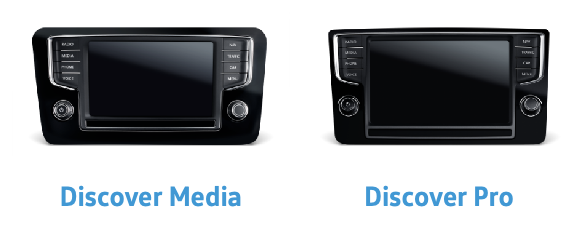
Yes. It’s really that small. And yes, those look pretty damn similar. No, there is no guide online how to identify your system. I found the PDF documents for both systems on how to update the maps and the Pro document helpfully pointed out the car’s system menu has information on what maps are installed on the device so you know what map package to search on their site. Here’s that screen:
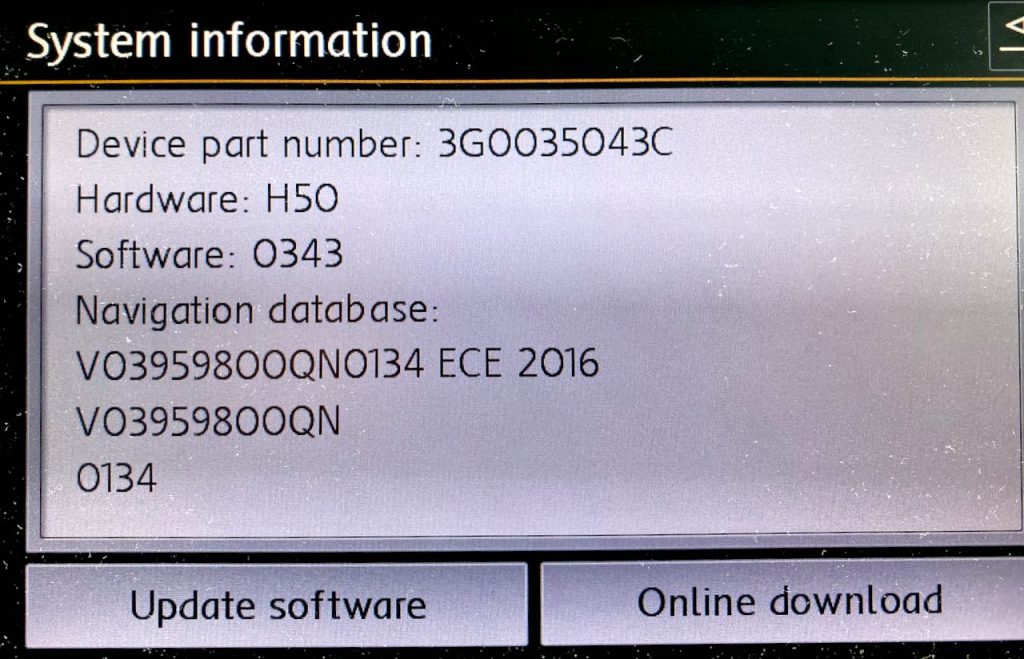
Guess once if any of those number sequences are on the Volkswagen website or if googling them tells anything useful. I did learn though the device part number refers to the navigation head unit and it’s available as a used part for €3k, but not if this is Media or Pro.
Interlude: that Update software button is maybe possibly for updating the car firmware. I don’t really know, as the in-car UI doesn’t tell me what it’s for and Volkswagen hasn’t made software downloads available for end users. The Online download button is the one mentioned above, which first requires I connect the car to a wifi network, which subsequently tells me either that Car Net activation has failed or that I don’t have a service activated that’s used for online updates, but I still don’t know what data / software this actually updates.
The update process uses an SD card to install the software. The Media version of the navigation says you must use an SD card from Volkswagen, while Pro says any class 10 SD card is fine. More googling ensued to find what people are saying on support forums, but looks like everyone is equally confused about this and I couldn’t find conclusive information on whether Media requires the manufacturer’s card or not. What users were saying though is, the official Volkswagen repair shops will absolutely not update the maps for you.
I decided to try downloading both update packages, with the assumption that the car would tell me if it’s finding the software on the card or not. At this point I had to give up the process for a few days to get back to home with fast Internet, as downloading the 20GB+ packages over 4G was taking too long.
To make things easy for consumers, someone in the Volkswagen team has decided to use the 7zip format for the package compression. Decompressor for this format is not installed by default on any operating system, so it beats me why someone decided this is a good idea. Is someone in the services team a 7zip fan? Did a manager in the services team or Volkswagen get a kickback from a 7zip software maker? Downloading the decompressor is not hard, but why would you want to add this step to the update process?
The update instructions did mention something curious though. Both recommended using an app called Discover Care to copy the map data onto the card and instructed me to go to navigation.com to download it. Navigation.com is a site run by Here Maps, presumably from whom Volkswagen has licensed the maps from. On the site, the flow seems to have an intuitive start where you first pick your car manufacturer:
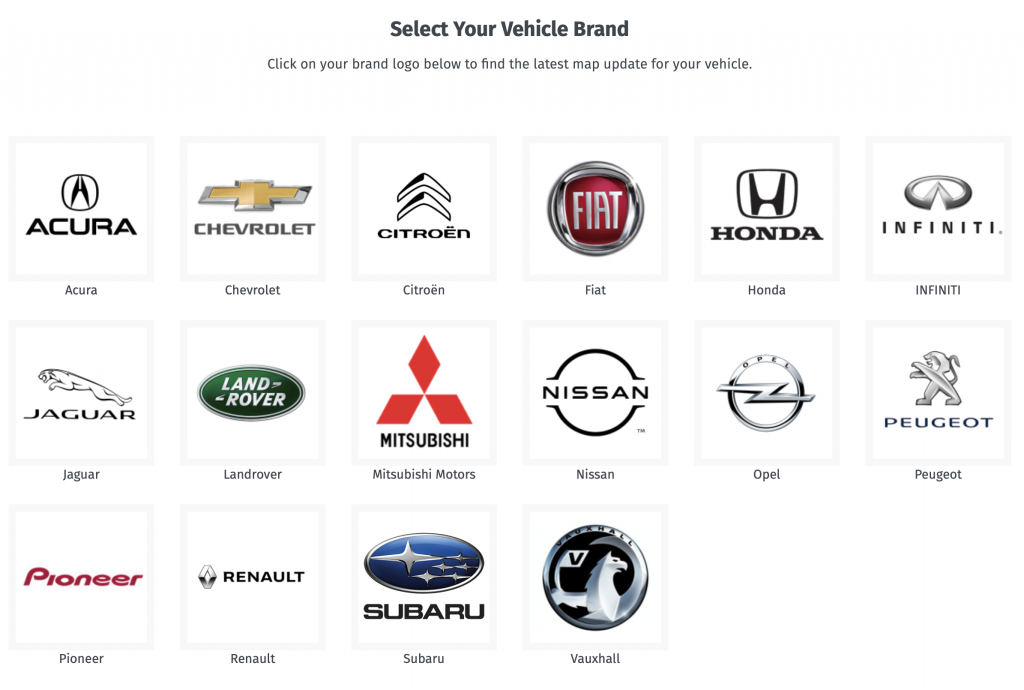
Oops, no car brands from VAG, the corporation that owns Volkswagen in sight. No other sections on the site that mention DiscoverCare. Site FAQs make no mention of the software or Volkswagen. Did the their licensing deal run out or did they change the deal? Has Here stopped supporting Discover Care? Why is Volkswagen guiding users to the site when the software is clearly not available for download?
I did eventually get hold of Here support and they confirmed the deal to give support to VW customers has run out years ago. Maybe VW could update their documentation accordingly and ping Here to add a FAQ on their site to point users to the right place for updates going forward?
I found the software on an external site, downloaded and run it, but it says an update is available and sends me to a Volkswagen software update site… which doesn’t list DiscoverCare as a downloadable. Looks like I’m stuck trying the update without the software.
The Discover Media PDF wasn’t clear on how long the update takes to read the files. The Pro document warns the update might take up to 4 hours to run. And here’s a kicker – the car must be on during the update (obviously), but this also means the car must be unlocked and plugged onto the charger for up to 4 hours to ensure it won’t run out of battery during the update process. Don’t have a charging port in a locked garage? Good luck! Wanna update during a drive? Doesn’t look like that works too well, as the system locks up while updating.
Thus I can’t really do the update in the city, but do have such facilities in the countryside. Next weekend I decided to try the Media update file set first. This seemed to work, as the entertainment system did indeed tell me it’s loading the update. Guess what? There is no progress bar, just a little spinner telling something is being worked on. After six hours of randomly dropping in to check the progress was still going on I decided to cancel the process and read some more. It didn’t take me too long to figure out I have the Pro navigation and one of it’s features seems to be that if you start the update with the wrong dataset, instead of telling you the data is wrong, it’ll just show you the progress indicator infinitely.
So, I quickly formatted the SD card, put the Pro update on it, and started the update. Around 4 hours of spinner later that still didn’t tell me if the update is actually progressing, the car showed an error message that some data is not available and the update failed. Good news is, I know what the system is now and re-reading the instructions, the update maybe failed due to me having had a single empty folder on the SD card in addition to the actual data. The next step is to try to update again, with a super duper carefully formatted SD card.
I don’t know if anyone from Volkswagen will read this, but I have a couple suggestions.
- Please have someone read through your customer documentation and check if software you’re telling people to download is actually available.
- Change the in-car system menus to tell users that the systems are in that specific car, using the same system names as you’re using toward customers, instead of cryptic part numbers. Having the part numbers in addition to the human readable data is obviously fine!
- For software update processes, 1) Have the operating system check the file suitability first and inform user if the file set is correct without taking hours in copying data first and for God’s sake don’t go into an infinite loop on progress indicators, 2) implement an actual progress indicator with a timer showing the expected duration of the update.
- For online services, tell users if the car is online before you allow subscribing to services that require connectivity and in the in-car menus, clearly list out what each of the updating features actually attempt to update.
- if you want to have people download compressed packages, consider using a compressor that actually comes by default on common operating systems.
- Figure out some way to give support for all of your software and services. Right now it looks like the online services has excellent support, but for example the navigation services don’t have any documented means for support. Local dealers don’t really care about aftermarket support and refer customers to the licensed repair shops, who in turn don’t care support navigation. Did I find a black hole in the support process? I bet I’m not the only one in this pit.
- Please review the service packages you’re offering to your customers and as an experiment, check what they’d look like if you re-structured them for best customer value. As is, the services look like Volkswagen is just trying to extract added value from me with no consideration for customer retention; VW made the money when the car was sold, so why care about what happens after? What you really want to do is what Tesla is doing, which is building retention by giving excellent aftermarket service. Requiring me to pay to 79€ a year to get access to a report on the car hardware health is the polar opposite of Tesla sending an over the air update to their fleet that improves the range and acceleration of their cars and exposes VW as a greedy corporation incapable of user-centered thinking. With the car supporting Android Auto and CarPlay, the biggest thing you’re really teaching me is, it doesn’t really matter what my next car brand is in terms of software, as the software I really want to use is in my pocket and not running in the car’s computer.
Update: I went to double-check the PDFs that from VW that I’ve read. Looks like part of what’s happening is, VW is currently hosting both documents that are up to date regarding DiscoverCar (but have all the other issues discussed above) and the old documents that refer to nonexistent software. The old documents haven’t been excluded from search engines, so if you use Google to find instructions for the software updates, Google points the user to the old documents. And given the PDF lives on the Volkswagen website, it’s impossible for an end-user to tell the document is not up to date. Perhaps VW should consider its operations in the context of the entire Web?
Update 2: I found the issue that blocked the update. 1) The user interface in the VW dashboard is pretty damn badly designed – if you insert an SD card and the expected files are not found on it… the dash will give you the “Searching for updates” spinner message forever. You never ever get a message telling you the updater isn’t finding the files. 2) If you follow the VW instructions exactly, unzipping files to the SD card creates a folder on the SD that’s named according to the ZIP file, instead of unzipping the contents of the files to the disk root. The updater in the car doesn’t look into this subfolder, vs expects files to be in the disk root. After again waiting for the spinner to disappear for around 4 hours, I moved the files from the folder to the disk root, re-ran the updater and 5 minutes later the UI changed and told me it found data on the disk.